

A gas log set offers the appearance of a wood fire without carrying firewood or cleaning up wood ash. Depending on the burner and valve, you can choose manual operation, a standing pilot, or compatible remote controls.
Before choosing a set, confirm the fireplace’s approved use, venting requirements, available space, and fuel supply. Those details determine which burner systems and control options will work in your installation.
Ventilation Options
Vented and vent-free gas logs have different installation requirements. Having an existing firebox does not automatically mean either type will fit or be approved for use.
Vented Gas Log Sets
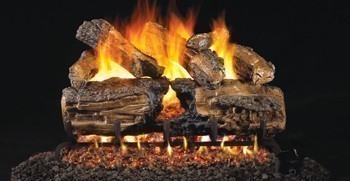
Vented gas logs send combustion exhaust outdoors through an approved, functioning chimney or flue. They are commonly selected for their flame appearance, but heat also leaves through the venting system.
- Confirm that the existing fireplace and chimney are suitable for the selected log set.
- Follow the burner manual’s damper-opening and damper-clamp requirements.
- Do not close the damper to retain heat while operating vented gas logs.
Vent-Free Gas Log Sets
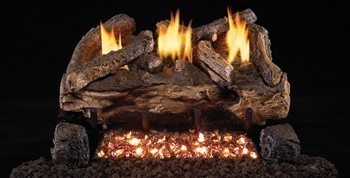
Vent-free gas logs release heat and combustion products into the room rather than exhausting them through a chimney. Installation depends on the appliance listing, room requirements, fireplace approval, and local restrictions.
- Use only a firebox or fireplace approved for the specific vent-free system.
- Confirm local permission and the manufacturer’s combustion-air and ventilation requirements.
- An oxygen depletion sensor is a safety feature, not a guarantee of indoor air quality or a substitute for a carbon monoxide alarm.
Fireplace Enclosure Size
Compare your fireplace measurements with the minimum firebox dimensions for the complete burner and control configuration. The advertised log length alone does not establish fit.
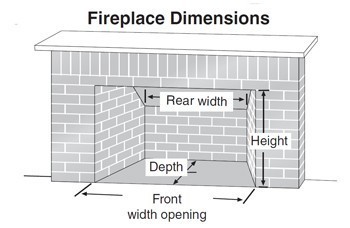
- Measure the front width, rear width, depth, and height as directed by the manufacturer.
- Account for the valve, pilot assembly, connections, and required service access.
- Check receiver placement and heat-protection requirements separately from burner dimensions.
Fuel Type Options
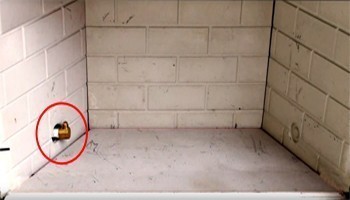
Choose a burner system configured for the actual fuel supplied to the fireplace: natural gas or propane. Have a qualified gas professional confirm the supply, pressure, and piping capacity for the appliance.
Do not assume a log set can be converted between fuels. Conversion is an option only when the manufacturer permits it and specifies the required components. Fuel type alone also does not identify which remote will work.
Ignition and Remote Control Options
The burner’s valve and ignition system determine how you light the logs and which remote functions are available. Choose the control configuration before ordering, especially if remote operation is a priority.
Manual Match-Light Assembly
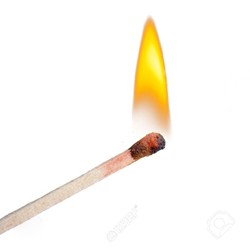
A match-light system uses manual lighting instead of a pilot. Follow the exact lighting sequence in the burner manual. Match-light configurations are limited to approved applications and fuel types; they are not an interchangeable option for every gas log set.
A handheld remote alone cannot operate a manual key valve. Adding remote control requires a manufacturer-approved control upgrade where one is available.
Manual Safety Pilot Assembly
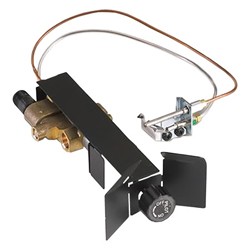
A manual safety pilot system uses a pilot flame to ignite the main burner, with burner operation controlled at the valve. The safety system is designed to stop gas flow if the pilot flame is lost.
A standing pilot does not automatically mean the valve accepts a remote. Confirm the valve model and approved accessory options before purchasing controls.
Remote-Controlled Pilot and Electronic Ignition Systems
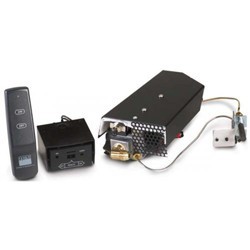
Remote-ready systems may provide on/off operation or flame adjustment, depending on the valve and controls. Some use a standing pilot that remains lit between uses. Others use electronic ignition to light the pilot when operation is requested.
These are different functions: a remote that switches the main burner on and off does not necessarily light the pilot or adjust flame height. Match the transmitter, receiver, and valve requirements using the appliance instructions.
For help identifying the control type, see How to Determine What Remote Works for You.
Other Configurations to Check
Product Listings and ANSI Standards
Look for the product’s listing and certification to the applicable standards. ANSI does not certify products itself; a certification body may evaluate a product to an ANSI standard. The exact burner, valve, logs, and accessories must match the approved configuration.
See-Through Log Sets
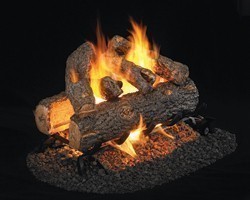
A fireplace viewed from two sides needs a burner and log arrangement approved for that installation. Confirm the see-through configuration rather than choosing a standard set based only on its appearance.
Reversible Gas Logs
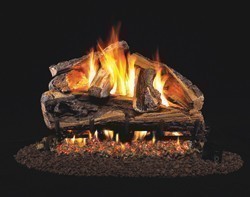
Some logs offer alternate finished faces for a different appearance. Reverse or reposition them only as permitted by the manufacturer’s placement instructions. Log positioning affects burner performance and pilot operation.
Contemporary Fire Glass Sets
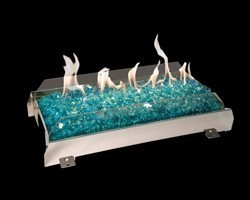
Fire glass provides an alternative to a traditional log appearance when used with a burner designed for it. Use only approved media in the specified quantity and placement. Removing logs and adding glass does not automatically create a compatible glass burner system.
Frequently Asked Questions
What information do I need to replace a gas log remote?
Gather the burner system, gas valve, transmitter, and receiver model numbers, along with the owner’s manual. A log collection name alone may not identify the controls. Confirm that the replacement is approved for the specific burner system.
Does turning off the remote also turn off the pilot?
Not always. On many standing-pilot systems, the remote turns off the main burner while the pilot remains lit. Pilot behavior depends on the ignition system and its settings. Follow the appliance manual for the correct shutdown procedure.
Final Thoughts
A suitable gas log set starts with the right venting, dimensions, fuel, and approved installation. Its valve and ignition system then determine how you operate it and which remote features you can use.
If you need help identifying compatible controls, visit our Fireplace Remote Controls Help Center. Have the burner, valve, and existing remote model numbers ready so our team can help check your options.